How Small Businesses Can Actually Use AI Agents (No Tech Skills Required)
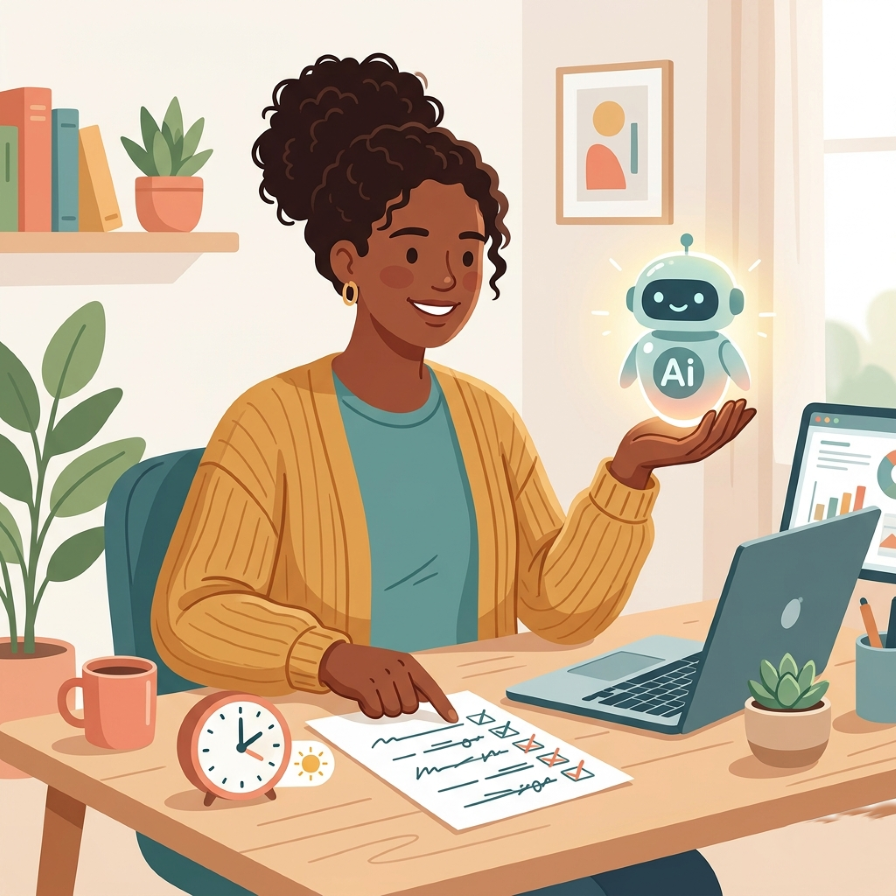
Last week, a friend contacted me. She runs a small marketing agency with only six people, all enthusiastic but short on time. She said, “I read your article about agentic AI. It sounded amazing, but how could it make my daily life easier? My toolkit is basic, a hefty to-do list and a dog waiting for a walk.”
She’s not unique in this. Conversations around AI agents often split into two camps: visionary thinkers picturing fully autonomous companies and tool creators pitching new subscriptions.
These discussions seldom focus on practical concerns, the business owner needing help with invoicing, the consultant hoping to spend less time hunting down leads, or the e-commerce founder drained by late-night customer queries.
This post is written for those people.
If you read my first playbook on agentic AI, you know the big picture. You are familiar with orchestrating outcomes and setting guardrails. You can find that post here: The Agentic AI Guide.
This time, we are getting practical.
Key Takeaways
AI agents can work for small businesses without any tech skills. Start with one repetitive task.
Use cases: lead generation (freelancers), customer service (e‑commerce), project follow‑ups (agencies).
Success isn’t about fancy tech; it’s about getting hours back, reducing stress, and building consistency.
Start small, measure time saved, then expand.
Forget the Hype, Think About Your To‑Do List
Every business runs on repetitive tasks. Some take five minutes. Some take an hour. Collectively, they eat up your week.
The goal of AI agents is not to build a futuristic marketing machine. It is to be given back to you on Tuesday afternoon.
Think of an AI agent as a reliable intern. Never sleeps. Never complains. Costs a fraction of a human. You still set the priorities. You still make the big decisions. You stop being the person who does the same thing for the tenth time this month.
Here are three common business types and the everyday problems they can finally hand off.
Three Types of Business, Three Everyday Problems Solved
For the Freelance Consultant
The problem: You spend hours each week on lead generation. You know you should be posting on LinkedIn, commenting, and reaching out. But you are busy doing the work you get paid for. So you end up in feast-or-famine cycles.
What an AI agent can do: Set up an agent that monitors LinkedIn for you. It watches for people in your target audience who get promoted, who post about problems you solve, and who interact with competitors. When it spots a signal, it drafts a personalised, helpful comment or message. Not a sales pitch. Something genuinely useful. You review and approve with one click.
One freelance brand strategist I know does exactly this. She saves four hours a week and has brought in three new clients in the two months. The agent does the prospecting. She does the relationship building. (If you’re curious how this works at scale, I help businesses build process automation that fits their team.)
For the E‑commerce Founder
The problem: You spend hours answering the same customer questions. “Where is my order?” “What is your returns policy?” “Do you ship to Northern Ireland?” You have an FAQ page. Nobody reads it.
What an AI agent can do: Connect an agent to your help desk or email. It reads every incoming message. It answers common questions automatically using your existing policies. For complex issues, it gathers the relevant details and passes them to you with a summary.
A candle maker I worked with set this up last month. She went from two hours a day on customer service to about twenty minutes. She now uses that time to develop new scents. Her customers get faster answers. She gets her life back. This is exactly the kind of customer experience improvement I help small businesses achieve.
For the Small Agency Owner
The problem: You are constantly juggling. Project updates, client feedback, internal deadlines, chasing approvals. You feel like your job is mostly about reminding people to do what they already said they would do.
What an AI agent can do: Set up an agent inside your project management tool. It monitors project statuses, pending approvals, and overdue tasks. Each morning, it sends you a summary of what needs your attention. It nudges clients when feedback is overdue and nudges team members when deadlines approach. All in your brand voice. All without you chasing.
A web design agency owner told me this has been her biggest time saver. She used to spend the first hour of her day checking everything. Now she scans one message and gets straight to work. If you’re ready to streamline your own workflows, let’s talk about digital transformation made simple.
What the Research Says
You might be thinking these are small examples. Does this really scale?
The short answer is yes. And the evidence is in the research.
A recent LinkedIn post curated ten reports from the world’s top consulting and technology firms. Every single one points to the same conclusion: AI agents are not about tools or prompts. They are about system design, governance, and connecting data.
Google’s enterprise guide talks about orchestrating multiple agents without chaos. Microsoft says AI success is an operating model, not tools. BCG notes that investment is shifting toward decision systems, not content tools. Cisco warns that if your data and systems are not connected, agents fail.
The message from all these reports is consistent. AI agents work when humans set the boundaries, and agents execute within them. That is exactly what we are doing here.
For the full list of reports and links, see the LinkedIn post here.
What About Larger Businesses? Start Small, Even If You Are Big
If you run a larger organisation, you might think these examples are too small. You have complex systems. Compliance. Budgets to approve.
Fair. But the principles are the same.
Pick a contained, low-risk process. Customer service triage. Lead qualification. Internal status reporting. Something where the cost of a mistake is low and the time savings are high.
Run it for 60 days. Measure the results. Build confidence. Then expand.
If you try to deploy agentic AI across your entire operation on day one, you will spend a fortune, confuse your teams, and fail. Not because the technology is bad. Because adoption is a human process. People need to see it work before they trust it.
So ask yourself: where is our version of this? What is the one annoying, repetitive, low-risk task we could hand over to an agent tomorrow?
Start there.
Where to Start: A Simple Decision Tool
Not sure which use case fits your business? Here is a simple way to decide.
If you spend more than two hours a week on customer messages, start with customer service automation.
If you spend more than two hours a week prospecting for new clients, start with lead monitoring.
If you spend more than two hours a week on project management and follow-ups, start with workflow nudges.
Pick one. Focus on it for two weeks. Then decide if it is working.
Keeping Score: What Success Looks Like
Forget complicated metrics. For a small business, success is simple.
Time. Are you getting back hours in your week? Are you finishing work earlier or using the time to focus on growth?
Stress. Are you less anxious about the small things? Are you no longer waking up worrying about whether you replied to that customer?
Consistency. Are things getting done even when you are busy? Is your business running a little smoother without you pushing everything?
These are the measures that matter.
Your Final Game Plan
AI agents are no longer future concepts; they are real and can help you with everyday problems that waste your time and energy.
You do not need a big budget or a technical team. Begin with a single task, start small, and let the technology earn your trust.
The first playbook was about the big picture, while this edition focuses on initial steps.
In the next post, I will go deeper and show you exactly how to set up these agents, with step-by-step configuration briefs you can use today.
In the meantime, select one workflow, give it two weeks, and review the outcomes.
Want to know which AI agent fits your business first? I help small businesses start small and scale smart. Let’s talk.