Video Is the New Text: Why Your Titles Matter for AI Search
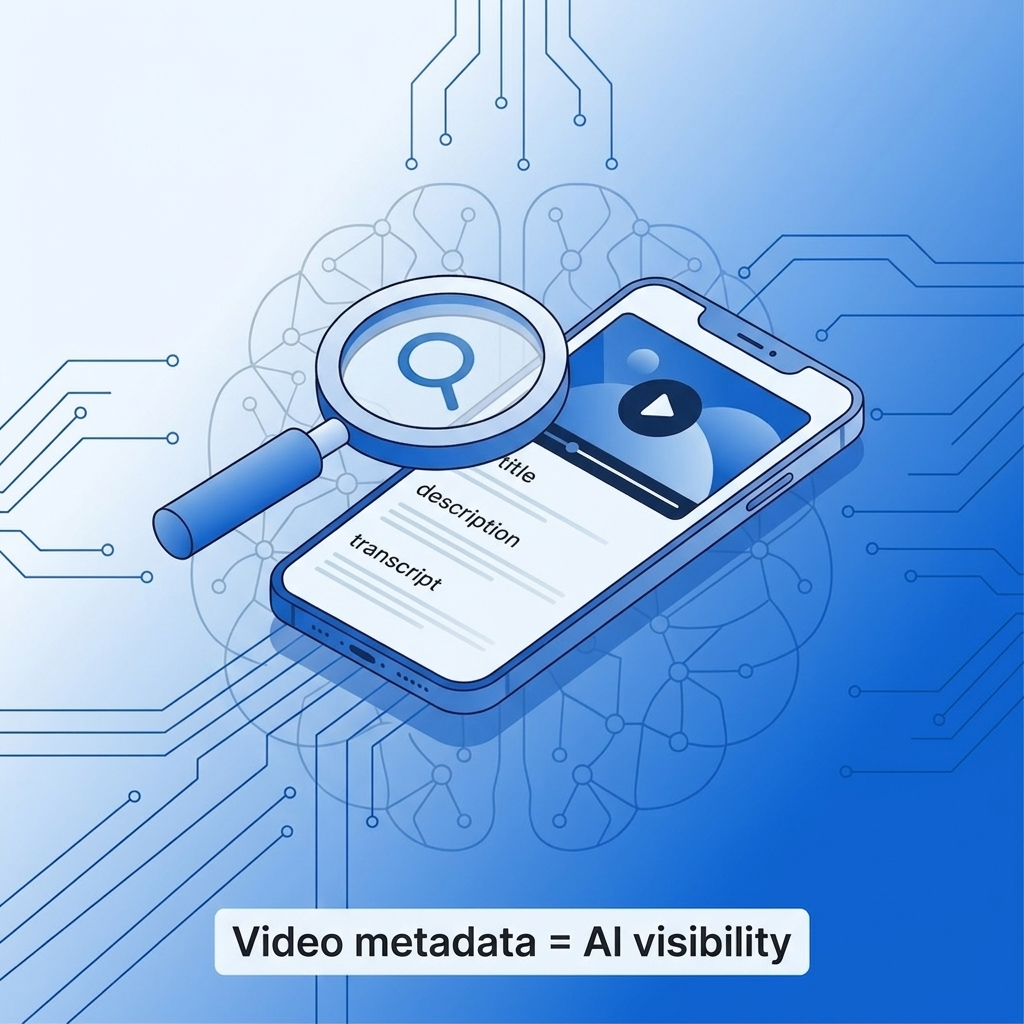
Recently, I watched a short but powerful video on LinkedIn from Neil Patel on AI and video ingestion. Video content is now being pulled directly into ChatGPT answers. This includes the video, its title, description, captions, and transcript.
In the past, we’ve optimised web pages for Google. Now, we need to optimise our video assets across platforms such as YouTube, TikTok, Instagram Reels, and LinkedIn. This is crucial in an era where AI agents summarise and combine answers directly, skipping over traditional search results.
If your video strategy stops at the view count, you’re leaving visibility on the table.
Key Takeaways
AI analyses the text associated with your video, including titles, descriptions, transcripts, and captions. This information is processed by models such as ChatGPT to inform their responses, irrespective of the platform being used.
Optimise titles for search queries by framing them as clear questions or solutions to specific problems.
Write detailed descriptions that provide a concise, structured summary of your video’s main points.
Prioritise accurate transcripts and captions, as clean text ensures your spoken expertise is captured and utilised.
This is a visibility strategy. Optimising for AI search is crucial in a world where traditional search behaviour is evolving.
The New Video Playbook
Large language models don’t “watch” your video in the human sense. They ingest the text that surrounds it. When someone asks a question, the AI checks your video's title, description, transcript, and captions across platforms such as YouTube, TikTok, Instagram, or websites to see if your content provides an answer.
Think of it this way: every video you publish is now a potential entry in an AI-generated answer. The quality and clarity of your metadata decide whether your video gets cited or ignored.
Here are four areas to focus on.
Titles Must Answer a Question
Avoid using vague or generic titles such as “Marketing Tips". Instead, use specific descriptive titles, for example, “How Small Businesses Can Use AI Agents for Marketing", which allows AI systems to align content with queries. This approach works across various platforms: a clear caption on TikTok or Instagram contributes as much value as a well-crafted YouTube title.
Descriptions Are Your New Summary
Instead of just sharing a few links and saying, "Thanks for watching,” provide a clear 100–200-word summary that highlights the main points of your video. Write naturally and mention the specific questions your video addresses. For TikTok, use the caption area; on Instagram, include this information in the alt text and first comment. This offers AI models a well-organised summary to reference.
Transcripts Are Non‑Negotiable
If your video doesn’t have a transcript, it’s invisible to AI. YouTube auto-generates them, but TikTok and Instagram don’t. You need to upload transcripts manually where possible, or at least include a full-text version in the description or a linked blog post. This transcript ensures that AI is working with clean data, capturing your expertise and specific terminology.
Captions Are for AI, Too
Captions serve accessibility, but they also provide another layer of text for AI to parse. Ensure your captions are accurate and align with your transcript for maximum clarity. Many platforms now support uploaded caption files; use them.
Why This Matters: Echoes from the Industry
Neil Patel isn’t alone in highlighting this trend. The shift towards AI‑driven search and discovery is a central theme in marketing.
Industry experts now discuss Generative Engine Optimisation (GEO) as becoming as crucial as traditional SEO. GEO targets content optimisation for citation as a source in AI-generated responses. Video content, with its extensive metadata, is especially suitable. If you’re new to the concept, my post on how to succeed with AI search explains the SEO and GEO combination.
Gartner predicted that by 2026, traditional search engine volume could drop by as much as 25% due to the rise of AI chatbots and other virtual agents. When users get answers directly from an interface like ChatGPT, they no longer need to click through to a website. The only way to be part of that answer is to have your content optimised for the AI’s retrieval systems.
This idea is closely linked to Visibility, the initial part of my 3Vs framework and an essential step in ensuring your brand stands out in an AI-driven world. Visibility is no longer just about ranking on a Google results page; it’s about being the source an AI chooses to cite. For a deeper dive, see the Visibility, Variability & Vibrancy post.
A Practical Shift for Your Content Workflow
Adapting to this doesn’t require a huge budget or a dedicated AI team. It requires a shift in your content creation workflow. Here’s how to integrate it:
Before You Hit Record: Outline your video with a clear, question‑based title in mind. What specific query is this video the answer to?
When You Upload: Treat your description (or caption) as a blog post summary. Write it first, then use it as the foundation for your transcript and captions.
After You Publish: Review your transcript. Fix any errors in auto‑generated versions to ensure accuracy. For platforms without auto‑transcripts, consider uploading a text file or linking to a full summary on your website.
By treating your video metadata with the same care as you would a blog post, you make your content discoverable not just for humans browsing social platforms but for the AI agents that are increasingly becoming their primary research tool.
This Applies to More Than Just “How‑To” Videos
This relates to all video marketing, not just educational content. For event-driven campaigns, targeting fan micro-moments like "how to stream FIFA World Cup in Jamaica" or "best hotel in Mexico near World Cup venues" makes ideal video topics. When you optimise your video’s title, description, and transcript for these queries, your content can show up in AI-generated answers even before fans use search engines.
Your Next Move
AI search is already here. Brands that manage their video metadata wisely across platforms will be referenced by ChatGPT, Google’s AI Overviews, and other similar agents.
If you want to dive deeper into how AI is reshaping discoverability across different formats, check out the posts on UGC and AI or the hidden SEO essentials for anywhere search success.
Have a specific video channel you’d like me to audit for AI readiness? I help businesses turn their content into a discoverability asset. Let’s chat.